About the Lab
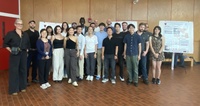
The Disease Biophysics Group (DBG) at Harvard University is an interdisciplinary team of biologists, physicists, engineers and material scientists actively researching the structure/function relationship in cardiac, neural, and vascular smooth muscle tissue engineering. We seek to quantify cellular mechanotransduction at the single-cell and tissue level to understand the effect on electrophysiology and disease states.
Cardiac Research
Our group’s primary research focus is on understanding cellular mechanotransduction in the heart. Specifically, we are interested in how extracellular matrix and cytoskeletal architecture potentiate and modulate the activation of mechanochemical and mechanoelectrical signaling pathways and genetic programs in cardiac cells and tissues. In order to study these mechanisms at different spatial scales, we use cellular and tissue engineering techniques that allow us to build custom-designed cardiac myocytes and ventricular tissue constructs as experimental preparations.
Why are we interested in this problem of biological scaling in the heart?
The Cardiac Arrhythmia Suppression Trial (CAST) of the late 1980’s was a clinical trial designed to test the hypothesis that suppression of premature ventricular contractions (PVC) with Class I antiarrhythmics (blockers of excitatory sodium currents) would reduce arrhythmic death risk. The trial was ended prematurely by the FDA when the mortality rate of those patients on encainide and flecainide, the Class I drugs studied, nearly quadrupled the mortality rates of those patients on placebo. Subsequent studies of antiarrhythmic drugs indicate that drugs that alter ion channel kinetics often show little or no benefit in the suppression of ventricular tachycardia and ventricular fibrillation. To date, there is no clinically reliable means of treating cardiac arrhythmias medicinally.
How are we approaching this problem?
We hypothesize that single channel blockade antiarrhythmic strategies were inherently flawed because they target a single scale (molecular level) without considering the fact that the pathogenesis of arrhythmias transcends multiple levels of integration, i.e., it is a multiscale problem. We propose that increasing the spatial scale of the drug target search, from single proteins to protein networks, will result in the development of more effective antiarrhythmic medicinal therapies. Thus, we take a multiscale approach, by targeting several spatial magnitudes simultaneously. At the length scale of a single cell, we study the cytoskeletal networks that span the entirety of the cardiac myocyte and modulate the kinetics of many of the more than half dozen ion channels that contribute to the cardiac action potential. More specifically, we investigate 1) how the cardiac myocyte cytoskeleton self-assembles; and, 2) the role of cytoskeletal architecture modulating action potential morphology and calcium metabolism. In tissue-scale studies, we investigate cell ensembles and correlate their behavior to larger tissue and whole heart function. Cell-cell mechanocoupling, via cell adhesion proteins and extracellular matrix, undoubtedly contributes to the electrical synchrony amongst cardiac myocytes. Here, more specific studies are directed towards investigating how the mechanical continuity amongst cardiac myocytes modulates electrical excitability and may contribute to the wavebreaks that mark the transition from ventricular tachycardia to ventricular fibrillation.

FIGURE: Microcontact Printing used to control Cardiomyocyte geometry and cellular architecture. For all Images: Sarcomeric actin labeled in green, sarcomeric alpha-actinin (Z-lines) marked in red, nucleus marked in blue.
A: Adult Rat Cardiac Myocyte without structural modification (nucleus not shown).
B: Neonatal Rat Cardiac Myocyte without structural modification, cultured on a monolayer of extracellular matrix protein.
C: Neonatal Rat Cardiac Myocyte cultured on a rectangular island of extracellular matrix protein.
D: Neonatal Rat Cardiac Myocyte cultured on a triangular island of extracellular matrix protein.
E: Neonatal Rat Cardiac Myocyte cultured on a square island of extracellular matrix protein.
F: Neonatal Rat Cardiac Myocyte cultured on a circular island of extracellular matrix protein.
Detection, Characterization and Visualization of Calcium Sparks In Micropatterned Cardiac Myocytes
Primary Investigator: Mark Bray, Ph.D.
The cytoarchitecture of the myocyte has been determined to be critical in understanding not only mechanical contraction of the cell but also electrical propagation. Knowledge of this mechanotransduction mechanism has implications in the treatment of stretch-activated arrhythmias, as well as understanding the role of the extracellular environment on intracellular signaling pathways. Our objective is to micropattern myocytes into various shapes and examine spark occurrence as a function of cell shape. The expectation is that cell shapes which incorporate regions of high mechanical cellular stress will modulate calcium spark characteristics as the cytoskeleton reconfigures itself accordingly. A critical and novel component of this project is the development of software able to detect and visualize sparks in two-dimensions.
FIGURE: Fluorescence map of square cell (top left) and with background fluorescence subtracted (bottom left). Visualization of spark boundaries with respect to (x,y,t), shown in red (right).

Estimation of Contractile Stress on Cardiac Myocytes
Primary Investigator: Poling Kuo, M.D.
We hypothesize that mechanical coupling between cells plays a critical role both in the normal and pathological development of cardiac tissues. We are using traction force microscopy to map the contractile stresses of micropatterned neonatal rat cardiomyocytes.
FIGURE: Relative stress field of cardiac myocytes exhibited by red vectors. The bottom black scale bar represents 10 um.

What's New
Picture of the Month – April 2012 April 6th, 2012
Isotropic cardiac myocyte monolayer stained for actin (red), beta-catenin (white), and nuclear DNA (blue). Image by Megan McCain, Parker lab.
Congrats to Kartik Balachandran! March 14th, 2012
Kartik Balachandran has been awarded the Postdoctoral Fellow Best Abstract Award by the Association of Scientists of Indian Origin Special Interest Group of the Society of Toxicology (SOT) at the SOT Annual Meeting in San Francisco, CA. This competitive award was based on a submitted abstract and a cover letter outlining the significance of his research. The award includes a plaque and monetary award of $500. Congratulations, Kartik!!
Congrats to Josh Goss!! March 5th, 2012
Josh Goss is one of the winners of the first Harvard School of Engineering and Applied Sciences Dean’s Excellence Award. Josh is the senior instrumentation engineer and staff scientists in the Disease Biophysics Group, designing and prototyping all of our experimental systems from microfluidic systems for organs on chips to blast bioreactors for brain injury research. Congratulations, Josh!! Thanks for all of your hard work!!
Picture of the Month – February 2012 February 24th, 2012
Micropatterned mouse ventricular muscle cells assembled into an anisotropic tissue showing nuclei (pink) and organized sarcomeres (orange). This organization recapitulates features of the native architecture of cardiac tissue. Image by Anna Grosberg, Parker lab.
Postdoctoral Positions in the DBG February 19th, 2012
We have several postdoctoral positions opening now and in the coming months. We are especially interested in candidates with backgrounds in theoretical biomechanics who are interested in conducting bench experiments. These positions will focus on our efforts to recapitulate organ-level function on chips for drug discovery and safety pharmacology.
All of these positions require a doctoral degree in an appropriate field and a demonstrated publication record. Applications in the form of a single PDF file containing a cover letter, resume, and up to three examples of first author papers should be forwarded to Prof Parker (kkparker@seas.harvard.edu). A list of references should be submitted with the resume with contact information.